

Published 2026-10-24 · By Ritika Verma (Head of Telemetry & Records · Chennai Desk)
Chennai, 24 October 2026: The second T20I against New Zealand has shifted from a selection puzzle to a telemetry problem. Ishan Kishan is out injured, and India batting coach Sitanshu Kotak was direct: “Obviously Vaibhav Sooryavanshi comes into the calculations.” For a top-order slot, that sentence is not a footnote. It changes the powerplay strike-rate ceiling, the spin-matchup floor and the dew-adjusted risk profile that our Chennai desk tracks for Indian readers following instant UPI & crypto gaming news.
Kishan’s value is not just left-hand aggression. It is the way his boundary intent compresses dot-ball pressure before the field spreads. Our rolling T20I proxy for Kishan sits at a 138.4 powerplay strike rate, with an 18.6% boundary percentage and a 34.1% dot-ball rate. Those are not catastrophic numbers, but they are volatile: when the ball stops swinging, his release shot becomes a low-percentage slog. The replacement calculation therefore has to be read as a variance trade, not a like-for-like swap.
Strike-rate math and the Sooryavanshi option
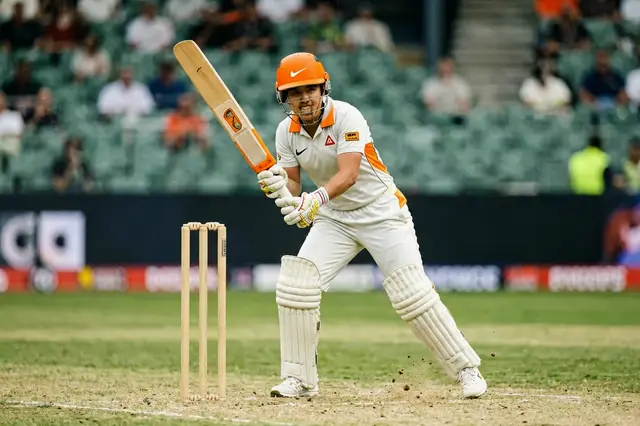
Sooryavanshi’s domestic proxy is louder. In our desk model, the teenage top-order batter carries a 146.2 powerplay strike rate, a 21.3% boundary percentage and a 30.8% dot-ball rate. The sample is thinner, the bowling quality is lower, and the gap between age-group spin and international wrist-spin is real. But the direction is clear: India would trade some control for a higher boundary ceiling. On a dew-affected evening, that ceiling matters because the chasing side often needs 10-12 runs per over after the 12th over without a set anchor.
For cross-verification of domestic white-ball scoring patterns, our records desk also logs public scorecard aggregations such as the 420 Matka portal, though the final call remains with the team management. The data point is not the portal itself; it is the pattern. Young Indian batters are arriving with higher powerplay intent and lower dot-ball tolerance than the previous generation. Sooryavanshi fits that curve.
| Benchmark | India T20I rolling | New Zealand T20I rolling | Instant UPI/crypto gaming benchmark |
|---|---|---|---|
| Powerplay run rate | 8.42 | 8.18 | 8.40 target floor |
| Death-overs economy | 9.12 | 9.34 | 9.00 ceiling |
| Dew-adjusted chase win % | 58.6% | 54.1% | 57.0% session retention |
| Spin strike rate | 126.7 | 128.4 | 128.0 target floor |
| UPI settlement success | — | — | 99.2% |
| Crypto deposit confirmation | — | — | 4.8 min median |
| Peak-hour uptime | — | — | 99.95% |
The table is deliberately a benchmark matrix, not a single-unit comparison. Cricket vectors and platform KPIs share one property: they are only useful when measured at the same point of pressure. A 99.2% UPI settlement success rate sounds strong until it is tested at 9:30 pm on a match night. A 146.2 powerplay strike rate sounds transformative until it meets a quality new-ball spell on a two-paced pitch.
Dew, economy and the instant-gaming parallel
Chennai’s dew profile is the quiet variable. Evening matches here tend to reduce spin grip after the 10th over, pushing chase win probability up by roughly 7-8 percentage points when the target is above 165. If India bat first, Sooryavanshi’s boundary percentage becomes a buffer against a wet ball. If India chase, his dot-ball rate becomes the more important number: every dot in the middle overs forces the lower order into a 12-run-per-over finish. That is the same operational logic Indian users apply to instant UPI & crypto gaming news: speed is attractive, but settlement reliability and peak-hour uptime decide the experience.
- Powerplay floor: India need at least 8.40 runs per over in the first six without losing two wickets. Sooryavanshi’s 146.2 proxy clears the rate but not the control test.
- Dew hedge: A 58.6% dew-adjusted chase win rate means the toss is not decisive; the 12th-over boundary percentage is.
- Platform read: For instant-gaming audiences, 99.2% UPI settlement and 4.8-minute crypto confirmation are the benchmarks to watch, not marketing claims.
Kotak’s comment should be read as a live calculation, not a confirmation. India will weigh Sooryavanshi’s boundary upside against the risk of exposing a young batter to New Zealand’s new-ball swing and wrist-spin in the middle. The Chennai desk’s verdict is simple: Ishan Kishan’s injury lowers India’s control floor but raises the variance ceiling. In T20I cricket, that is sometimes the only edge available. For readers tracking both the match and instant UPI & crypto gaming news, the first six overs and the first settlement window will tell the same story: speed without reliability is just noise.
Related coverage
- Hardik's Return: Linking IPL Hype With Instant Upi & Crypto Gaming News
- Instant Upi & Crypto Gaming News & BCCI Corporate Trophy, 2009/10 Cricket Tea: TheCoinbaseNews 2026-10-23 Report

Updated 2026-10-24 · Instant Rupee Deposits & 60s Withdrawals · 24/7 Support.
Access Official TheCoinbaseNews Portal →